


The defeat of the Republicans in the American midterm elections cannot be considered merely the result of party competition or public dissatisfaction with the economic performance of Donald Trump's administration. One of the most important factors of this defeat must be sought in the White House's foreign policy and the consequences of America's and the Zionist regime's aggression against Iran; a confrontation whose costs crossed the region's borders, affected the energy market, and finally reached the daily lives of American citizens. Now the important point is that Donald Trump himself has also acknowledged the role of Iran in his party's electoral defeat.
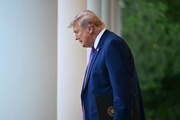
In a conversation with The Wall Street Journal, in response to a question about the effect of the confrontation with Iran on the Republicans' performance in the midterm elections, the American president said: "Iran was one of those factors." He also considered the rise in oil prices one of the factors damaging the Republicans' political position; however, he still defended his decision and said that if he were in the same situation again, he would repeat the same decision. At the same time, Trump claimed that the most important reason for the Republicans' defeat was the absence of his name on the ballots.
These remarks, apart from Trump's effort to reduce his own responsibility, are a noteworthy confession about the consequences of his administration's foreign policy. The American president now accepts that the confrontation with Iran played a role in weakening the Republican Party's electoral position; an issue that shows the consequences of Washington's strategic decisions cannot be assessed merely in the field of regional developments.
The Return of the Costs of Confrontation to America
One of the most important consequences of the aggression against Iran was its effect on the global energy market and the rise in fuel prices in America. Disruption in energy transfer routes, especially in the Strait of Hormuz, and the increase in uncertainty in the oil market raised economic costs and placed new pressure on American households. This issue was doubly important for the Trump administration because before returning to the White House, he had won the support of an important part of the voters with the promise of reducing inflation and living costs.
The statistics show the dimensions of this pressure. The price of regular gasoline in America exceeded four dollars per gallon; a figure about one dollar higher than the same period the previous year. The price of oil also rose at some points during the crisis to the range of 112 dollars per barrel. For the American citizen, these figures are not merely indicators in the global market; the rise in fuel costs directly affects commuting, the transportation of goods, and the price of many services and products.
For this reason, the confrontation with Iran gradually turned from a foreign policy issue into an economic and livelihood issue inside America. Citizens who were facing rising daily costs felt the effects of the government's decisions in their own lives; this too under conditions in which Trump had previously promised to reduce living costs.
Voters and the Bill of Foreign Policy
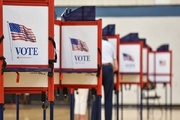
The election exit polls also show how important the issue of living costs was in voters' decisions. According to the results of an exit poll, nearly 90 percent of voters considered living costs an important or very important factor in their choice. Also, about two-thirds of the participants identified Trump as responsible for the high prices of goods and services. In the same poll, 62 percent expressed dissatisfaction with the American president's performance.
These statistics show that economic dissatisfaction was not merely a marginal issue in the election, but had become one of the most important criteria for evaluating the government. The noteworthy point is that an important part of the voters considered the Trump administration's policies, including the confrontation with Iran and trade tariffs, to be influential in the worsening of their economic situation.
In such an atmosphere, the Democrats were able to link the rise in fuel prices and living costs to the government's policies. In other words, they turned the Trump administration's foreign confrontation from the level of a complex international file into a tangible issue for voters: why should American citizens pay the cost of a decision for which the government offers security and strategic justifications?
The Gap Between Promise and Performance
Trump defends the correctness of his decision, while the election results have shown that part of the cost of this decision has been written to the account of the Republican Party. He tries to separate the defeat from his own record by emphasizing that he was not personally a candidate in the election, but the midterm elections in America usually become an opportunity to evaluate the performance of the president and the incumbent administration.
On the other hand, the contradiction between Trump's election promises and his administration's performance is also important in this defeat. By criticizing the previous administrations' foreign interventions and promising to focus on domestic issues, he had been able to bring part of American society along with him. But entering into a costly confrontation with Iran challenged this image. When a government comes to power with the slogan of reducing living costs, the rise in energy prices following a foreign crisis can severely pressure the credibility of its economic promises.
Of course, all the factors of the Republicans' defeat cannot be reduced to the Iran file. Trade tariffs, inflation, the situation of Republican candidates, and dissatisfaction with the government's overall performance also played a role in the election result. However, Trump's explicit acknowledgment of Iran's role and his emphasis on the effect of the rise in oil prices show that this file has become one of the vulnerable points of his administration in the electoral competition.
A Message Beyond Washington
The reaction of Andy Burnham, the British Prime Minister, to the results of the American elections is also noteworthy from another angle. He considered these results an opportunity for the international community to focus on ending the conflict with Iran and reducing living costs, and stressed that the message of American voters is also in this same direction.
This position shows that the consequences of the confrontation with Iran have not remained limited to Tehran-Washington relations and have become an issue at the international level. The rise in energy costs, economic uncertainty, and concern about the continuation of the crisis also encourage other governments to pursue a political solution and reduce tensions.
From this perspective, the American midterm elections must be analyzed beyond the shifting of congressional seats. This election showed that a costly foreign policy can become one of the factors weakening the incumbent government domestically. Trump may still insist on the correctness of his decision regarding Iran, but he cannot ignore its political and economic consequences, especially since he himself has recognized Iran's role in his party's electoral defeat.
What was revealed in the recent American elections was the return of the costs of foreign policy to the inside of this country; a cost that first appeared in the energy market and the livelihood of citizens and then showed itself in the arena of political competition. In this way, the confrontation with Iran not only became one of the important challenges of the Trump administration's foreign policy, but its effects also found their way into one of the important factors weakening the Republicans' position inside America.
MNA

















Your Comment